
Local SEO for Healthcare Practices: What Actually Moves Rankings
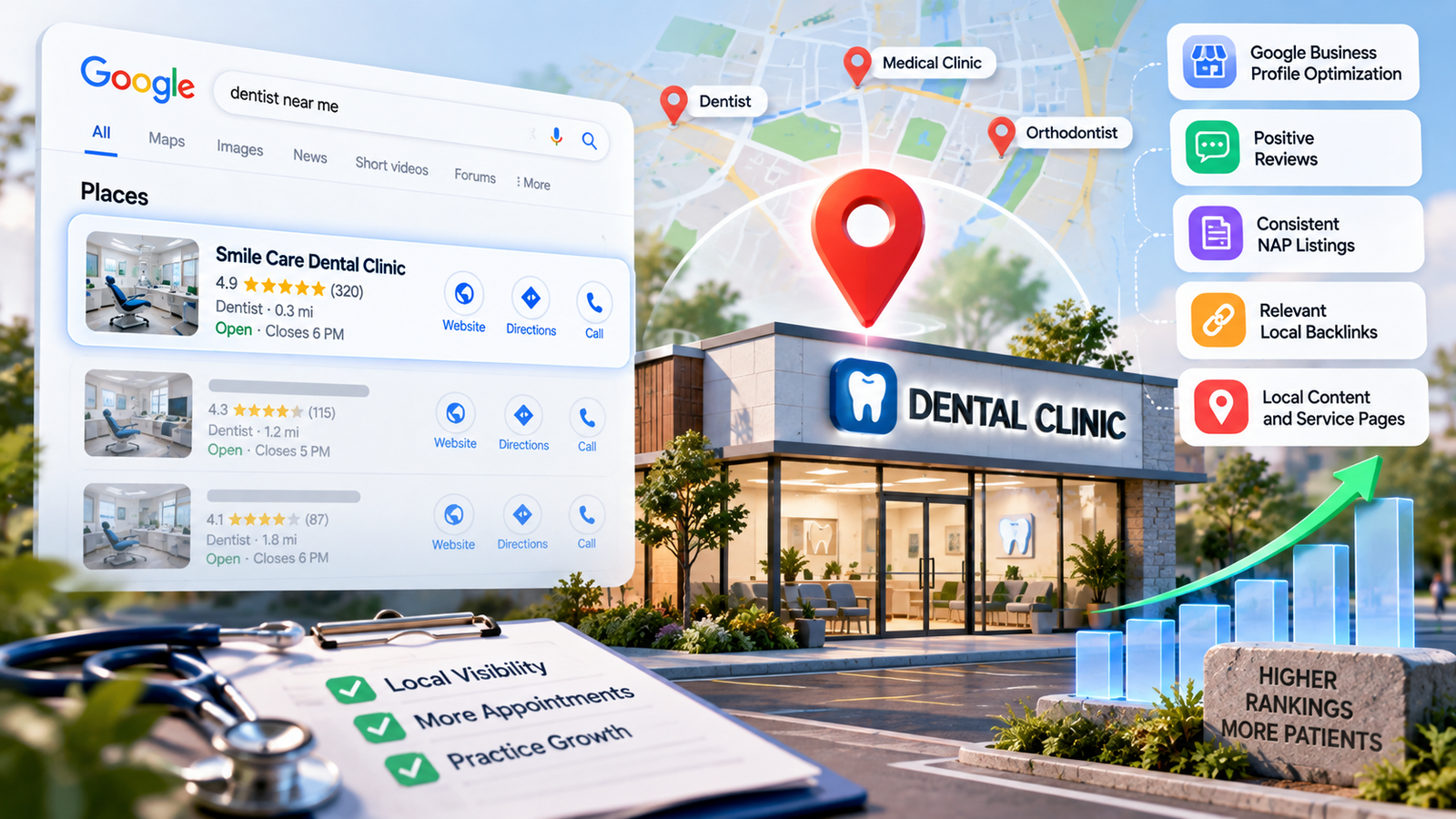
When someone searches “dentist near me” or “cardiologist in Toronto,” they rarely scroll far. They look at the map, the handful of practices listed beside it, the star ratings, and they call one. For a healthcare practice, showing up in that small set of local results can decide whether new patients find you or your competitor.
Local SEO for clinics is also full of bad advice, expensive packages and tactics that stopped working years ago. This guide focuses on what actually moves rankings for dental, medical and specialist practices, and what healthcare marketers should stop wasting money on.
How Local Rankings Work
Google is unusually open about this. It says local results are based mainly on three factors: relevance, distance and prominence.
- Relevance: how well your listing matches what the person searched for.
- Distance: how far your practice is from the searcher or the location in the search.
- Prominence: how well known and trusted your practice is, based on information across the web, including reviews, links and articles.
You cannot change distance, short of moving. That leaves relevance and prominence, and nearly every effective local SEO tactic improves one of those two.
1. Your Google Business Profile Is the Foundation
For most practices, the Google Business Profile does more for local visibility than the website itself. Treat it as your most important marketing asset.
- Choose the right primary category. “Dentist,” “Pediatric dentist,” “Cardiologist” and “Medical clinic” rank for different searches. The primary category matters more than almost any other setting. More effect local ranking by digital pr.
- Add relevant secondary categories that genuinely describe your services.
- List your services in detail. Implants, emergency appointments, specific procedures and conditions you treat all improve relevance.
- Keep hours accurate, including holiday hours. Wrong hours frustrate patients and hurt trust.
- Add real photos: the building exterior, reception, treatment rooms and the team. Stock photos add little.
- Use the questions and updates features to answer common patient questions.
2. Reviews Drive Both Rankings and Bookings
Reviews help with prominence, and they strongly influence which practice a patient chooses. A consistent flow of genuine reviews matters more than a large number collected all at once.
- Ask every satisfied patient, ideally right after the appointment with a simple link or QR code.
- Respond to every review, positive and negative, professionally and promptly.
- Never share patient information in replies. Healthcare privacy rules apply. Do not confirm someone was a patient or discuss their treatment publicly, even if they did.
- Never buy or fake reviews. It violates Google’s policies and can lead to listings being penalized.
3. Service and Location Pages on Your Website
Your website supports relevance. Build dedicated pages for your core services and, if you have several locations, for each location.
A strong service page for a clinic includes:
- What the treatment is and who it helps, in plain language.
- What patients can expect before, during and after.
- Who performs it, with credentials.
- Frequently asked questions, including cost ranges and insurance if appropriate.
- A clear way to book.
Avoid thin pages that swap city names into the same text. They add little value and can look like spam.
4. Show Real Medical Expertise
Health content is held to high standards because mistakes can harm people. Practices that show real expertise have an advantage.
- Add author and reviewer names with credentials to health content.
- Build detailed profile pages for each clinician.
- Keep medical information accurate and reviewed regularly.
- Link to reputable medical sources where appropriate.
5. Consistent Citations
Citations are mentions of your practice’s name, address and phone number on other websites, such as healthcare directories, local business listings and insurance provider directories.
Consistency matters more than volume. If your address is written three different ways across the web, search engines and patients can get confused. Audit your major listings and fix inconsistencies, especially after a move or rebrand.
6. Local Links That Build Prominence
Links from trusted local sources are strong signals of prominence. For healthcare practices, good opportunities include:
- Sponsoring local sports teams, schools or community events.
- Partnering with local businesses such as gyms, pharmacies or wellness centers.
- Being quoted as an expert in local news stories about health topics.
- Membership listings in professional associations.
- Community health talks or free screening days covered by local media.
These links are harder to earn than paid directory placements, and far more valuable.
[NEEDS INPUT: one anonymized example from your dental or cardiology client work, such as which local link or profile change produced the clearest ranking improvement.]
7. Technical Basics That Still Matter
- Mobile speed: most local searches happen on phones. A slow site loses patients.
- Click to call: make phone numbers tappable on mobile.
- Online booking: patients increasingly expect to book without calling.
- Local business markup: structured data helps search engines understand your practice details.
What to Stop Paying For
- Hundreds of low quality directory listings. A focused set of accurate, relevant listings beats volume.
- Keyword stuffed business names. Adding “Best Dentist Downtown” to your listing name violates guidelines and can get your listing suspended.
- Fake location listings. Creating listings at addresses where you do not see patients is a policy violation.
- Monthly reports with no actions. If your agency sends rankings charts without explaining what they changed, ask why.
How to Measure Success
Rankings are useful, but patient bookings are the goal. Track these:
- Calls, direction requests and website clicks from your Google Business Profile.
- Online booking completions from organic search.
- Review count, average rating and response rate.
- Local pack visibility across your service area, not just from one location.
- New patient numbers attributed to search.
The FounderFeat Take
Local SEO for healthcare is not complicated, but it rewards consistency. Practices that keep their profile accurate, earn reviews steadily, publish genuinely helpful service pages and build real local relationships almost always outrank those chasing shortcuts.
For practice owners, the best question to ask any agency is simple: which of these fundamentals are you improving this month, and how will we know it worked?