
How AI Search Changed Which Backlinks Actually Matter
Link building has been declared dead more times than anyone can count. Every major algorithm update, every new search feature and now every AI announcement brings another round of predictions that links no longer matter.
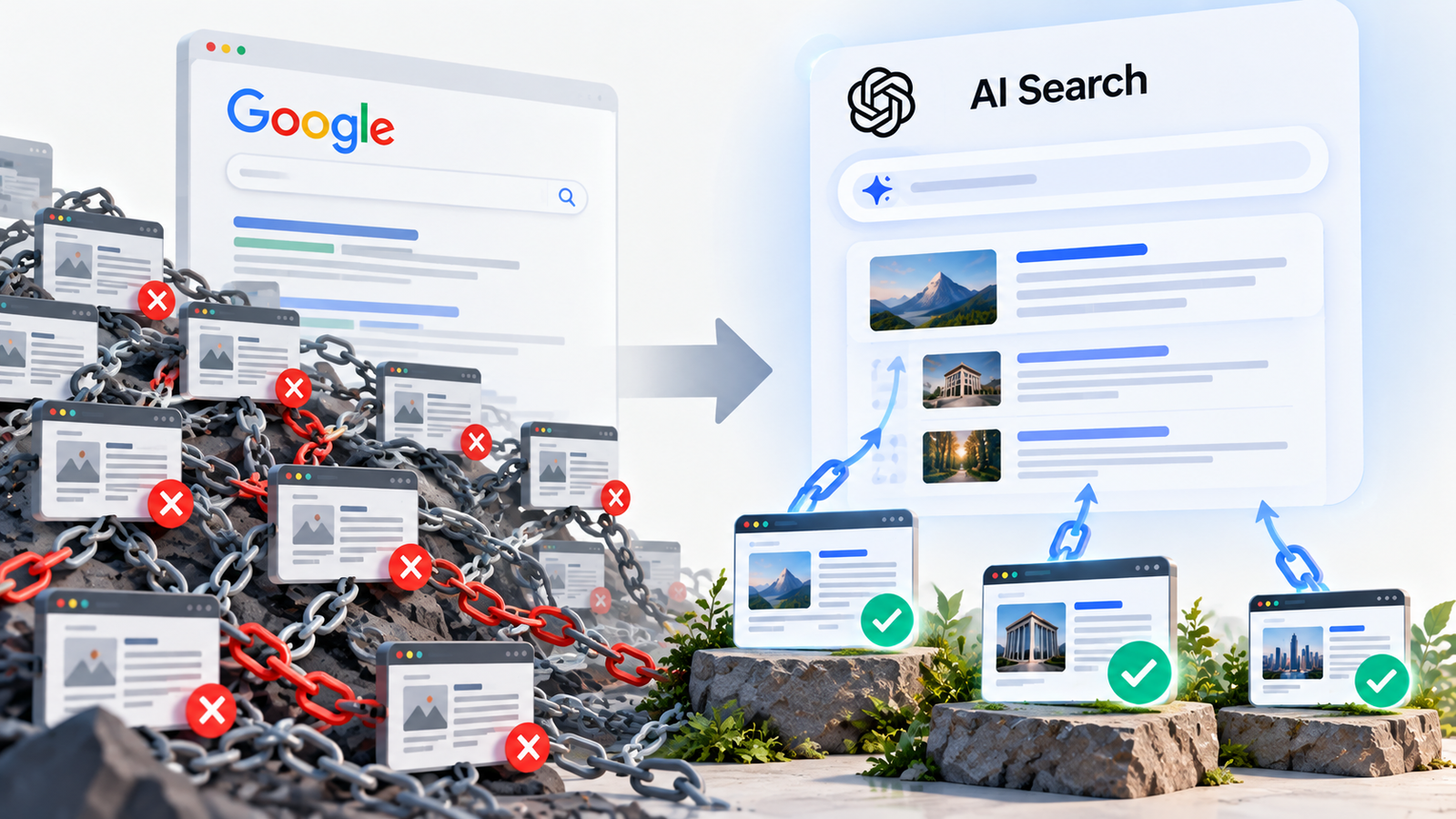
They still matter. What has changed is which links matter, and why. AI search has shifted the value of a link away from pure ranking power and toward something broader: whether your brand is trusted, cited and visible in the places search engines and AI systems draw from.
For founders and marketers deciding where to spend a link building budget in 2026, that shift changes almost everything about the plan.
What AI Search Changed
The biggest change is simple. Fewer searchers click. Pew Research Center found that when a Google AI summary appeared, users clicked a traditional result in 8% of visits, compared with 15% without one. Clicks on links inside the summaries were rarer still.
That means ranking in position three for an informational query is worth less than it used to be. At the same time, the sources AI systems cite and the brands they mention have become more valuable. The goal of link building has widened from “rank this page” to “make this brand the obvious authority.”
Pew’s data also showed where attention concentrates. Wikipedia, YouTube and Reddit were among the most cited sources in both AI summaries and standard results. Search systems lean heavily on sources they already trust.
Links That Matter More Now
1. Editorial links from genuinely relevant publications
A link from a respected publication in your industry, placed because the writer referenced your work, carries both ranking value and credibility. These links signal that real experts consider you a source. They are harder to get and worth far more than they used to be relative to cheap alternatives.
2. Links that come with brand mentions in context
AI systems learn which brands belong to which topics partly through how often and where those brands are discussed. A link inside an article that explains what your company does, in the right topical context, builds that association. A link buried in a list of unrelated sites does not.
3. Links to original data and research
When you publish a survey, benchmark or dataset, other writers cite it. Those citations build authority naturally, and original data is exactly the type of content AI summaries tend to reference rather than replace.
4. Links from community and discussion platforms
Given how often platforms like Reddit appear as sources, genuine participation where your customers talk matters. The goal is not spam. It is being recommended by real people in real conversations.
5. Local and industry citations
For businesses serving specific areas or niches, consistent listings in trusted directories and industry associations remain a strong trust signal, especially for local search.
Links That Matter Less, or Hurt
Mass guest posts on unrelated blogs
Sites that publish anything for a fee, on any topic, have been losing value for years. Google’s spam policies specifically call out large scale guest posting campaigns with keyword rich anchor text links as link spam.
Private blog networks
Networks built only to pass links remain high risk. When they are detected, the links stop counting, and the money spent on them is gone.
Paid links without proper labeling
Google’s policies treat buying or selling links that pass ranking credit as a violation. Sponsored placements should be labeled appropriately.
Links from sites with no real audience
A site with strong metrics on third party tools but no real readers is a warning sign. If no human would ever click the link, its value is questionable at best.
A New Way to Judge a Link
Old link evaluation focused almost entirely on metrics like domain authority scores. Those numbers still help as a filter, but they miss what matters most now. Use these five questions instead:
| Question | Why it matters |
|---|---|
| Would a real person on this site click the link? | Real traffic signals a real endorsement |
| Is the site genuinely about my topic? | Relevance builds topical authority |
| Does the site have real, recent traffic? | Filters out sites that only exist to sell links |
| Does the page describe my brand accurately? | Context shapes how AI systems understand you |
| Would I be comfortable if Google reviewed this link manually? | The simplest spam test there is |
How to Rebalance a Link Building Budget
If your current plan is mostly volume based, shift gradually rather than all at once. A sensible rebalancing looks like this:
- Fewer, better placements. Cut the cheapest tier of links first. Put the savings toward outreach to relevant, high quality publications.
- Invest in linkable assets. Original research, useful tools and expert guides earn links for years.
- Add digital PR. Pitching journalists with genuine stories and data builds both links and brand mentions.
- Track brand visibility, not just rankings. Monitor branded search volume and whether AI tools mention your brand for your core topics.
What This Means for Agencies and In House Teams
For agencies, the reporting conversation needs to change. Clients used to judge link building by link counts and authority scores. The better measures now are relevance, real traffic on linking sites, brand mentions and conversions from organic search.
For in house teams, link building should sit closer to PR and content. The work of earning trusted mentions overlaps heavily with building a brand that journalists, communities and AI Strategy systems recognize.
The FounderFeat Take
AI search did not make links irrelevant. It made bad links more obviously worthless and good links more valuable. The strategy that wins now is the one that always should have won: earn links from places your customers actually trust, in contexts that explain who you are.
The founders and agencies that adapt will spend less on links and get more from them. The ones still buying volume will keep paying for placements that neither search engines nor AI systems take seriously.