
Microsoft’s Hyderabad Data Centre Comes With a ‘Zero-Water’ Cooling Promise
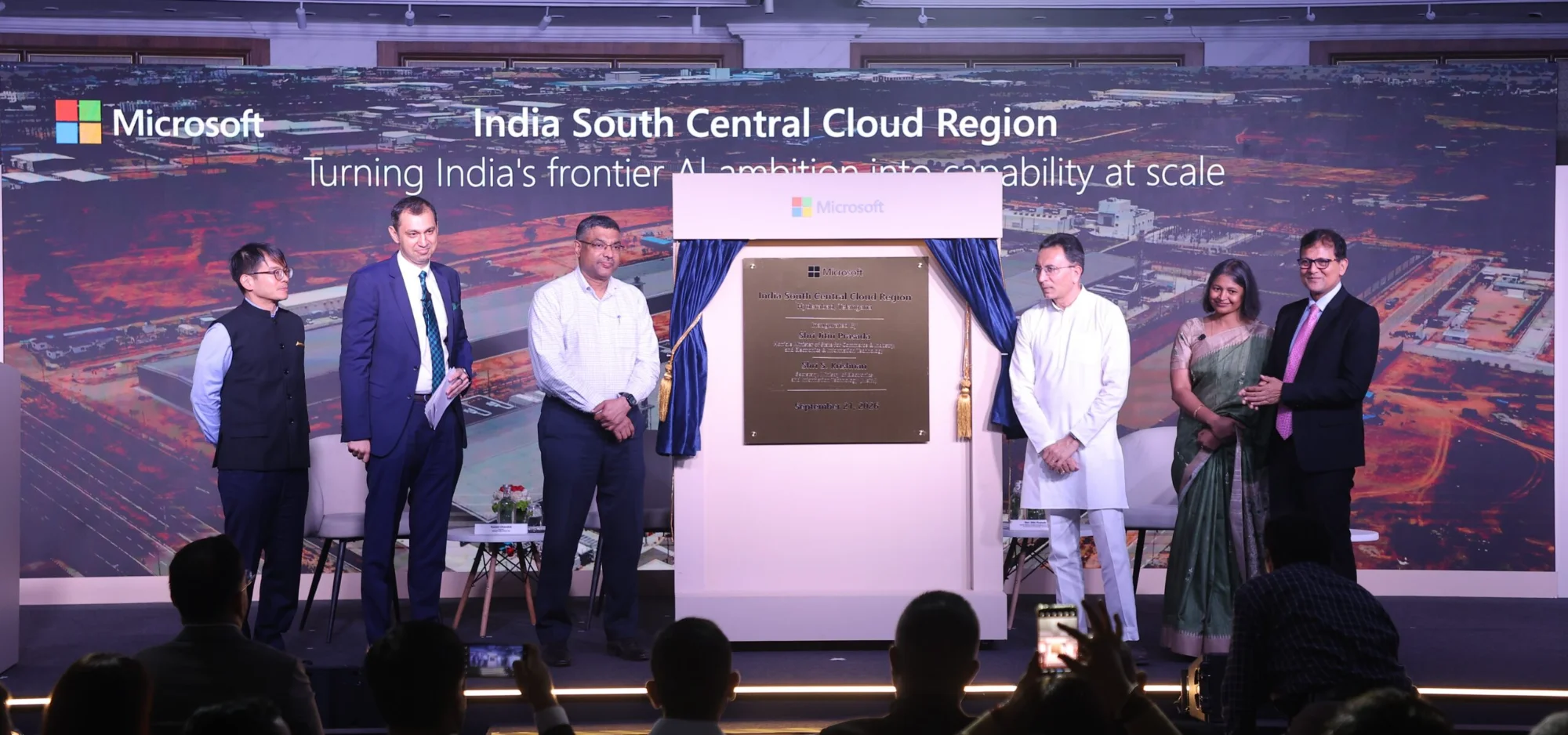
fter Pune, Chennai, and Mumbai, Microsoft has now formally begun operations for its fourth cloud data centre establishment in India—the ‘India South Central’ region in Hyderabad.
At its AI Infrastructure Summit in New Delhi, the company stressed that the South Central data centre will use “zero water”. The company claims that its “high efficiency mechanical cooling” will deliver “effectively zero water use for cooling.”
“Six months ago, I went to the innovation lab of the data centre in Redmond [Washington, Microsoft HQ], and I saw the system being tested—and I’m happy to see it being deployed here,” Rajiv Kumar, Managing Director and President of Microsoft India Development Center, tells AIM.
Make no mistake, the data centre isn’t entirely dependent on air cooling either, given that it also houses cutting-edge AI infrastructure and GPUs from NVIDIA, AMD, and others.
The company is enabling chip-level technologies such as direct-to-chip liquid cooling and microfluidics, which bring cooling closer to the source of heat. In such cooling systems, the liquid typically circulates in a closed loop, carrying heat away from the chip before being cooled and recirculated, while high-efficiency air cooling can be used elsewhere in the facility.
Also ReadAdobe Warns Indian Enterprises are Still Not Ready for AI Agents
With the South Central region, Microsoft said that it has achieved a PUE (power usage effectiveness) of ~1.1, meaning that for every 1 unit of electricity consumed by the data centre’s IT equipment, only around 0.1 additional units are used for supporting infrastructure such as cooling and power distribution.
The company also said last year that all its facilities in India will use air-cooled chillers and zero water for cooling. The company also said the expansion comes as India’s largest companies choose to build on its Azure cloud infrastructure, with demand up 3–4x over the last 12 months.
In the Hyderabad region, Microsoft is also working with local partners on groundwater recharge, rainwater harvesting, and watershed resilience. Its Elikatta groundwater-recharge programme had added around 5 million litres of recharge capacity by June 2026, according to the company.
“So in fact, we’re adding more water [with data centre projects],” Kumar shares.
Microsoft’s announcements come as growing water-stress concerns cloud India’s data centre ambitions. According to a February report by the Council on Energy, Environment and Water, India’s data centres use approximately 150 billion litres of water annually. This figure is expected to more than double by 2030.
Also ReadTo Stop AI Cloning, India’s Courts Build Personality Rights—Case by Case
Kumar also notes that the South Central data centre is completely powered by green energy.
Steady Growth for Azure Demand in India
The South Central region is part of Microsoft’s larger $20.5 billion investment commitment to India.
Microsoft said 90% of the country’s top hundred companies by market cap are building on Azure, including the top 10 banks. Companies including Adani Group, Bajaj Finserv, HDFC Bank, and PB Pay have already signed up for South Central.
What’s your take on this story?Add your comment
Kumar also reveals that the company has signed agreements with certain Indian AI startups to give them access to compute and AI infrastructure hosted in the company’s data centres.
The latest data centre also includes all the features of Azure, including access to over 11,000 AI models hosted on the platform.
Also Read Enterprises Must Put Business Problems Ahead of AI Hype
Unlike Microsoft’s coastal data-centre locations, Hyderabad does not sit directly on a submarine-cable landing station. Kumar says the location was chosen mainly because of customer demand, latency, and its central position in the country.
“You want the lowest latency, and from that perspective, Hyderabad is central to the country,” he notes.
The South Central region is also Microsoft’s largest data centre footprint in India, with three physically separated availability zones, each backed by independent power, cooling, and networking infrastructure.
Data can be replicated across zones, with latency between them as low as 2 milliseconds. Kumar adds that the data centre will primarily serve its third-party customers.
The region is also paired with Microsoft’s Pune facility for disaster recovery. The company said the two regions sit in different seismic zones, allowing customers to build cross-region resilience for mission-critical workloads and meet applicable RBI requirements.
Also Read Don’t Ditch React Native Just Because Shopify Did So
Data Centre Talent
In addition, the company has placed greater focus on data centre talent. Its Data Center Academy in Hyderabad is offering a 600-hour, industry-aligned training programme to prepare students for careers in data centre operations and infrastructure management.
This is being delivered in partnership with Young India Skills University and the Telangana government.
According to a recent report from the Boston Consulting Group (BCG), every rupee spent on data centre capacity in India could generate roughly ₹3.25 rupees in economic output. The estimate is based on an economic model built on data from the Ministry of Statistics and Programme Implementation of India.
The report also noted that two-thirds of data centre operators globally report talent shortages, creating an opportunity for India to train its engineering workforce for data-centre roles spanning power, cooling, construction, connectivity, and equipment.
“Whenever you have new value–it comes with new jobs,” says Kumar. “Not just inside data centres, but people who are using the data centre, and employing talent because of the ability to build new value on top of this infrastructure.”
Microsoft also points to economic activity around the Hyderabad facility itself, saying hundreds of local youths are being trained, 117 micro-enterprises have emerged around the data centre, and community programmes have reached 22,000 people in villages around Hyderabad.